Introduction
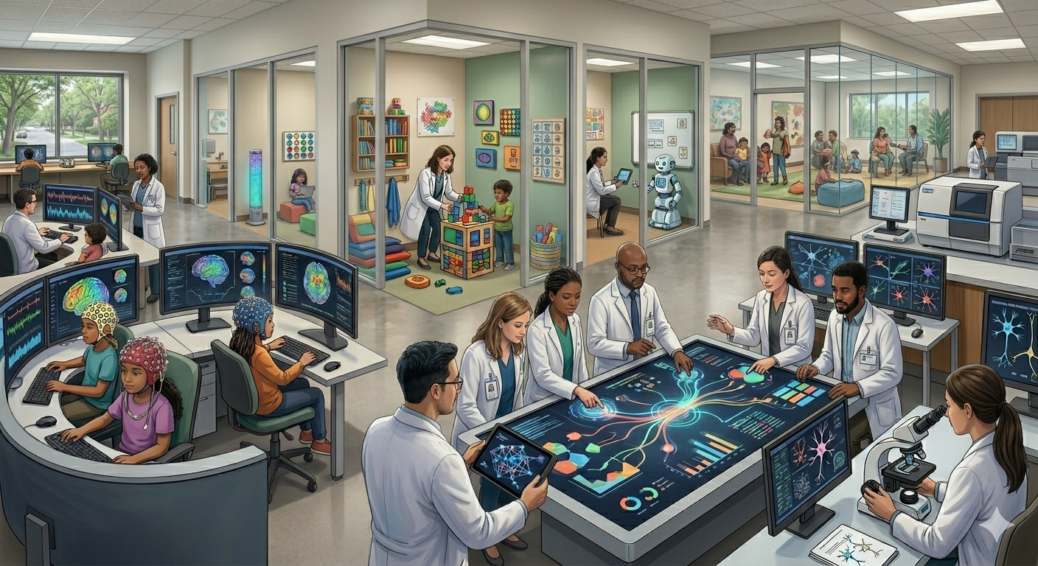
Recent autism research is helping scientists better understand how the brain, genetics, and early development are connected to Autism Spectrum Disorder (ASD).
Autism Spectrum Disorder (ASD) is a condition that affects how a person communicates, learns, and experiences the world around them.
In the past, doctors and researchers often treated autism as one single condition.But modern science now shows something important:
Autism is not one single type.
It is a spectrum with many different patterns.
In 2025, researchers continue to study autism using brain science, genetics, and new technologies to better understand how it works.
1. What We Know About the Autistic Brain
The brain works by sending signals between nerve cells using chemicals called neurotransmitters.
One important chemical is glutamate, which helps brain cells communicate.
Some research suggests that in autism, brain communication may work differently in certain regions. Researchers link this to the way the brain processes information, attention, and sensory input.
However, scientists are very clear:
There is no single brain scan or test that can diagnose autism.
Autism is not a brain “defect” — it is a different way of processing information.
2. Autism Is a Spectrum (Not One Condition)
One of the biggest discoveries in modern research is that autism is extremely diverse.
Every autistic person can have different strengths and challenges.
Some may:
- need more daily support
- have speech or learning delays
Others may:
- communicate well
- but struggle with social interaction or anxiety
Researchers are studying whether they can group autism into different biological and behavioral patterns, but scientists have not officially confirmed these patterns in medicine yet.
3. Genetics and Autism
Autism is strongly linked to genetics.
This means autism can be influenced by:
- inherited genes from parents
- new genetic changes that happen before birth
Scientists also agree:
- Autism is NOT caused by one single gene
- Many genes work together in complex ways
Researchers are also studying why doctors diagnose autism more often in boys and how genetic differences affect brain development in different individuals.
4. Important Scientific Facts of autism Research (Myths vs Reality)
Science has clearly confirmed some important facts:
Vaccines do NOT cause autism
Paracetamol (acetaminophen) does NOT cause autism
Parenting style does NOT cause autism
Autism begins very early in brain development, mostly before birth, and is mainly linked to genetics and biology.
These facts are supported by global health organizations and large-scale scientific studies.
5. New Technology Helping Autism Research
Modern technology is helping scientists study autism in new ways:
Eye-tracking tools
Track how children look at faces and objects to understand attention patterns.
Digital screening apps
Help detect early developmental differences through behavior analysis.
Brain organoids (mini-brains)
Lab-grown brain models made from human cells used to study brain development and test treatments safely.
These tools are still being tested, but they may help improve early detection and understanding in the future.
6. Early Support and Intervention
Research shows that early support can make a big difference in development.
Helpful support may include:
- speech and communication therapy
- structured learning programs
- play-based learning activities
- parent-led guidance and training
One key finding: consistency and early start matter more than program name.
Parents and caregivers play a very important role in helping children build communication and daily life skills.
5 Best Strategies for Empowering Autism
7. Autism Across the Lifespan
Autism research is now expanding beyond childhood.
Scientists are studying:
- how autistic people age
- mental and physical health in adulthood
- autism diagnoses that happen later in teenage years or adulthood
- support gaps in healthcare systems
There is also growing awareness that some groups (such as girls and marginalized communities) may be diagnosed later or less accurately. Living with Autism: A Path to a Normal Life Today
Conclusion
Autism research in 2025 is moving toward one clear direction:
Autism is not one single condition — it is a spectrum with many different patterns.
Science is still working to fully understand it, but progress in brain research, genetics, and technology is helping us move closer to better support systems.
The main goal of research is simple:
✔ earlier understanding
✔ better support
✔ improved quality of life
References
- Autism Science Foundation (ASF). “2025 Autism Research Year in Review.” https://autismsciencefoundation.org/
- Nature Portfolio. “Autism Spectrum Disorders: Latest Research and News.” https://www.nature.com/subjects/autism-spectrum-disorders
- Yale School of Medicine. “Researchers Discover Molecular Difference in Autistic Brains.” https://medicine.yale.edu/
- National Institute of Mental Health (NIMH). “Autism Spectrum Disorder (ASD).” https://www.nimh.nih.gov/health/topics/autism-spectrum-disorders-asd
- Autism Research Institute (ARI). “Helping Children with Autism Tune Into Voices.” https://autism.org/
- LEARN Behavioral. “What Causes Autism? Understanding the Latest Research.” https://learnbehavioral.com/